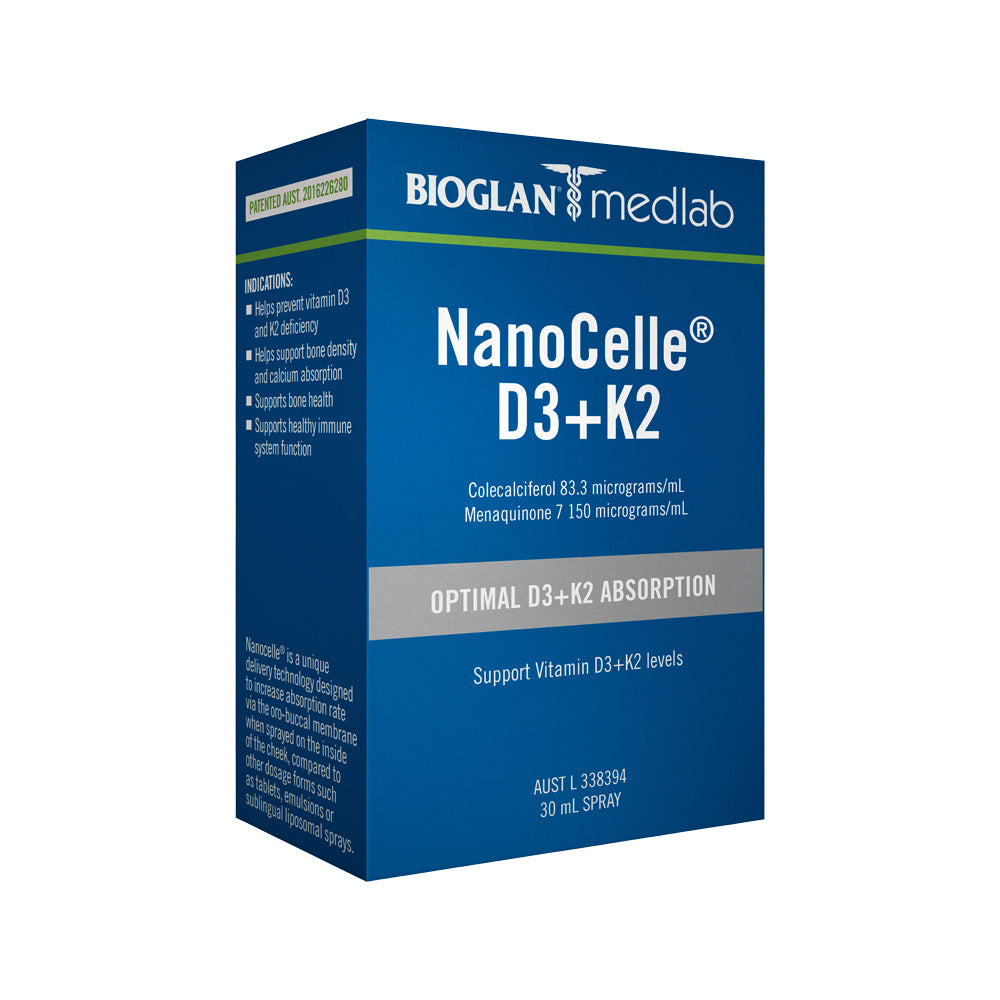
STANDARD INDICATIONS
- Prevention/treatment of vitamin D3 and/or K2 nutritional deficiency. Vitamin D helps calcium absorption and a diet deficient in calcium can lead to osteoporosis in later life.
SPECIFIC INDICATIONS
- Vitamin D is required for proper cellular and immunological function.
- Vitamin D3 supplementation may increase serum vitamin D levels and bone mineral density (BMD) in vitamin D deficient individuals.
- Vitamin D3 binds to and activates the vitamin D receptor (VDR) that is responsible for the transcription and transrepression of genes.
- The VDR is a nuclear receptor found in immune cells and other cell types and is a control system for the innate immune system.
- Vitamin D3 binds to the VDR in immune cells and activates the transcription of cathelicidin and beta-defensin that are antimicrobial peptides.
- Vitamin D3 may help to promote healthy respiratory function.
- Vitamin D3 is involved in the attenuation of inflammatory responses and conditions within the body.
- The micellization process produces nano-sized particles that enhances nutrient absorption and bioavailability.
- Vitamin D3 is associated with musculoskeletal health (bone and muscle fibres).
- Vitamin K2 (menaquinone-7) supplementation may improve serum vitamin K status and may help to reduce bone loss in postmenopausal women.
- Vitamin K is required for the post translational carboxylation of glutamate into gamma-carboxyglutamate (Gla) residues in Gla-proteins that are required for blood coagulation and bone mineralization.
- Vitamin K2 serves as an obligatory cofactor for an essential carboxylase enzyme that activates seven protein components of the blood-coagulation cascade.
- Vitamin K is required for the carboxylation of two proteins essential for normal bone metabolism, osteocalcin and matrix Gla protein.
- Long term use of menaquinone-7 may improve arterial stiffness in health postmenopausal women, especially in women having high arterial stiffness.
- A number of blood coagulation factors including coagulation factors II (prothrombin), VII, IX and X are well known examples of Gla-containing proteins (vitamin K dependent) which are synthesised in the liver.
- Osteocalcin, a bone specific protein synthesised by osteoblasts, and matrix Gla protein synthesised in blood vessel and bone are Gla-containing proteins (vitamin K dependent) synthesised at extra-hepatic sites.
- Menaquinone-7 is a long chain menaquinone found in fermented foods and at particularly high levels in natto.
- The effects of long chain menaquinone-7 in normal blood coagulation is greater and longer lasting than vitamin K1 found in leafy green vegetables and MK-4 that is found in animal products.
 Directions for use